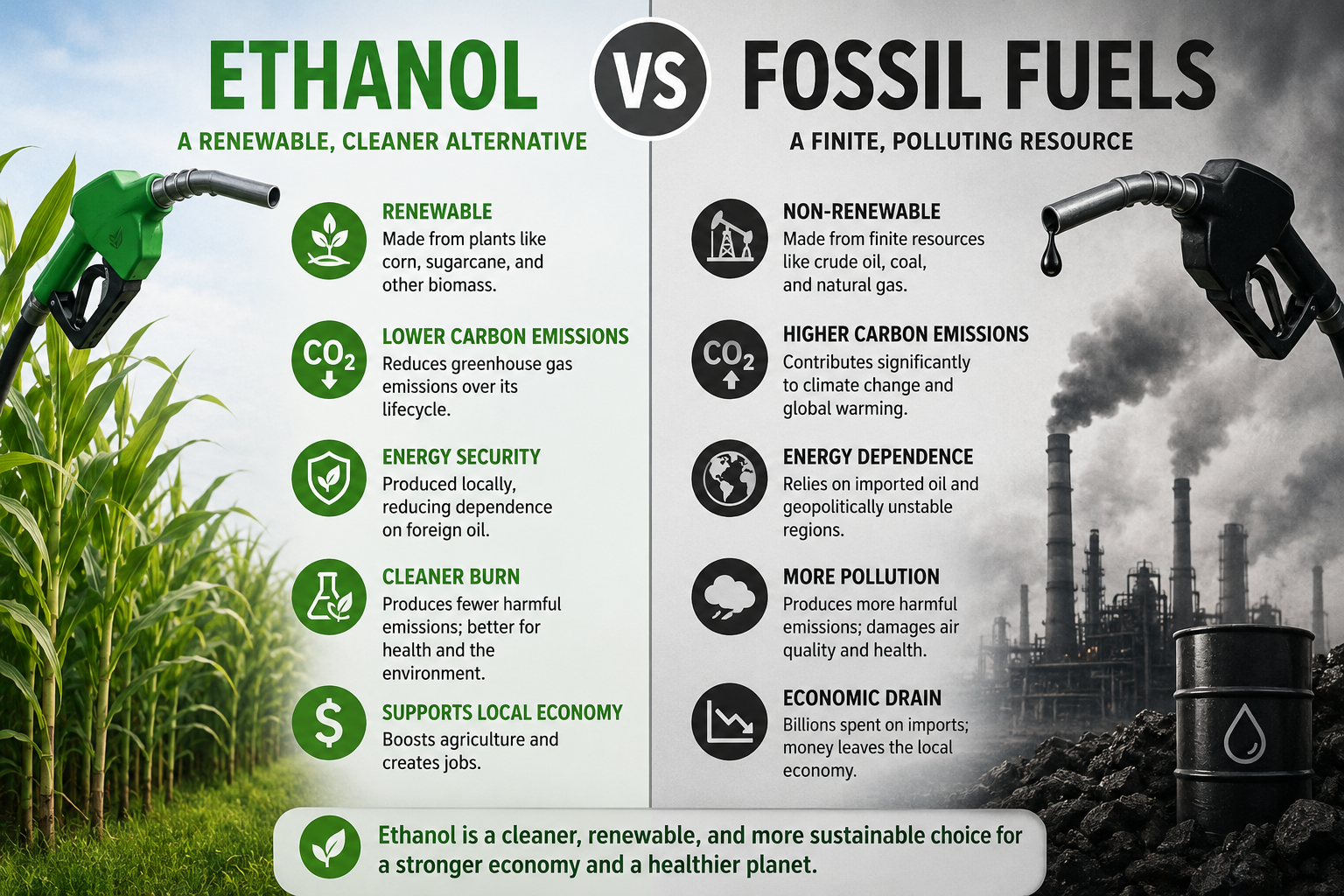
On the night of June 13, 2026, Union Minister Nitin Gadkari signed a file. At 8 PM, in what he described as one of the most defining moments of his political career, he put pen to paper — legally authorising the use of 100% ethanol as vehicle fuel in India. Within hours, the news spread across boardrooms, farms, and fuel pumps. A dream, once ridiculed, had become law.
"I used to talk about this dream," Gadkari said at his press conference in Nagpur, "and people used to laugh. Some friends even used to criticise it."
I read those words and I smiled. Not because I was surprised — but because I have heard those exact words in my own head, in my own journey building JPrime Solar Energy right here in Maharashtra.
The Laughter Always Comes First
There is a particular kind of loneliness that comes with believing in an idea that the world hasn't accepted yet. I know it well.
When I started JPrime Solar Energy, solar power in Maharashtra was treated as a curiosity — a rooftop experiment for the environmentally idealistic, not a serious industrial proposition. The questions were always the same: What happens at night? What about the monsoon? Isn't the grid enough? Why solar when coal is cheaper?
I answered those questions patiently, project by project, panel by panel, kilowatt by kilowatt. Maharashtra is one of the most energy-hungry states in India. Its industries run hard, its agriculture is fragile, and its cities demand power at a scale that no single fuel source can meet alone. I believed then — as I believe now — that the answer was never one fuel. The answer was always a portfolio of clean energy working in concert.
Gadkari believed the same about ethanol when nobody else did. And today, Toyota, Maruti Suzuki, Hyundai, Hero MotoCorp — they are all racing to align with his vision. The WagonR now runs on 100% ethanol. Splendor motorcycles run on E100. The automobile industry didn't lead this revolution. A stubborn dreamer did.
That should tell us something.
What the 100% Ethanol Approval Means for India
Let me be direct, as someone who has spent years studying India's energy economics from the ground up.
India currently spends approximately ₹22 lakh crore every year on fossil fuel imports. This is not just a number — it is a transfer of Indian wealth to foreign nations, year after year, denominated in a currency we must earn through exports. Every time crude oil prices spike — as they have dramatically with recent global volatility — ordinary Indians feel it at the pump, in transport costs, in the price of food.
100% ethanol fuel, produced domestically from sugarcane, maize, broken rice, and agricultural waste, breaks that dependency. It keeps money within India's borders. It creates demand for India's farmers. It reduces the forex pressure on the rupee. And critically, it has already proven its viability — ethanol blending crossed the 20% target six years ahead of schedule, a fact that Minister Hardeep Puri rightly called a historic achievement.
The regulatory framework Gadkari has now put in place — amending the Central Motor Vehicles Rules to formally recognise E85 and E100 — is the infrastructure that the ethanol economy needs to scale. This is how revolutions happen: not in one dramatic moment, but in the accumulation of policy, technology, and will.
As a solar industrialist, I applaud this step wholeheartedly. Not out of politeness — but because it validates something I have always said to my team at JPrime: India will decarbonise not by choosing one clean source over another, but by building all of them simultaneously.
My Thought on the Environment — An Honest One
Here is where I must speak not as a cheerleader, but as a person who cares about the land, the water, and the air of Maharashtra, and of India.
Ethanol is cleaner than petrol. It burns with lower particulate emissions, lower carbon monoxide, and is biodegradable. These are real environmental gains, and they matter enormously in a country where air quality in cities like Mumbai, Pune, and Nagpur is a daily public health crisis.
But ethanol is not without its environmental costs — and scaling to 100% ethanol nationally demands we confront them honestly:
Water
Sugarcane, the dominant feedstock for Indian ethanol, is one of the most water-intensive crops in existence. Maharashtra's Marathwada and Vidarbha regions already face acute water stress. Scaling sugarcane cultivation to meet national ethanol demand without a parallel strategy for water conservation would be environmentally reckless.
Land
If we convert food-growing farmland to fuel-growing farmland at scale, we risk food price inflation, rural disruption, and ecological monocultures. The lessons from Brazil and the United States — pioneers of ethanol programmes — must be studied carefully, not repeated blindly.
The Real Opportunity: Waste-Based Ethanol
Maharashtra produces enormous volumes of agricultural residue — sugarcane bagasse, rice straw, cotton stalks, corn cobs. These are currently burned in fields, releasing carbon directly into the atmosphere and turning our skies orange during harvest season. Second-generation ethanol from this biomass is the true prize: fuel from waste, energy from what we would otherwise destroy. If India prioritises this pathway, the environmental equation changes dramatically for the better.
As a solar energy founder, I know that the environment does not reward good intentions. It rewards intelligent systems. Ethanol must be built on the right feedstocks, with water accounting, land-use discipline, and waste-first sourcing. If it is, this policy will be remembered as one of the great green pivots in Indian industrial history.
If it is not, we risk trading one dependency for another.
The Larger Picture — Where Solar and Ethanol Meet
People sometimes ask me whether I see ethanol as competition to solar. The question misunderstands how energy transitions work.
Solar powers homes, factories, offices, and increasingly, electric vehicles in urban India. Ethanol powers the 30 crore flex-fuel vehicles, two-wheelers, and trucks that will continue to run on liquid fuel for the next two decades — especially in rural India, where EV charging infrastructure remains a distant promise.
These are not competing technologies. They are complementary pillars of the same clean energy future.
At JPrime Solar Energy, we are already exploring integrated energy models for agri-industrial clusters in Maharashtra — where solar panels power the ethanol distilleries, where waste biomass feeds second-generation ethanol plants, and where the electricity generated reduces the carbon footprint of production itself. This is not a fantasy. It is an engineering challenge with a real solution, waiting for policy alignment and private investment to make it real.
Gadkari's signature on that file on June 13 is, for me, one more piece of that alignment falling into place.
To Every Founder Being Laughed At Right Now
If you are somewhere in Maharashtra — in Nagpur, Nashik, Kolhapur, or a taluka none of your investors have ever visited — building something clean, something sustainable, something that the world isn't ready to believe in yet: do not stop.
The energy transition is the defining industrial story of our generation. It will create more wealth, more employment, and more resilience than any sector before it. And it will be built by people who kept going when everyone else was laughing.
Gadkari carried ethanol in his heart for decades. He launched India's first 100% ethanol car in 2023. He pushed through E85 regulation last week. And last Saturday night at 8 PM, he signed the final file.
— JPrime Solar Energy, Maharashtra
The author is the Founder of JPrime Solar Energy, a Maharashtra-based solar energy company committed to accelerating India's transition to clean, homegrown power.